


25
2025
-
08
The "hands and feet" of the brake air circuit - analysis of common faults of brake sub-cylinders
The importance of the brake system for the vehicle does not need to be repeated, the entire pneumatic system of the truck supports the vehicle's braking system. From the pump, to the dryer to the control valves, and finally to the brake sub-pump, the sub-pump is like a hand and foot, braking the driver-controlled brake device. In the entire brake system, the sub-pump is the most direct contact with the brake, so if there is a brake failure, under normal circumstances, the first thing to check is the sub-pump.
1. Principle and use of brake chamber:
1. Diaphragm spring brake chamber: The diaphragm spring brake chamber has both a driving cavity (front cavity) and a parking cavity (rear cavity), which generates force through inflation and deflation. The driving cavity is used for the main brake (driving brake), the parking cavity is equipped with energy storage springs for parking and emergency braking, and the main feature of the parking cavity is to obtain mechanical braking force by releasing spring energy. The control airway of the two chambers is completely independent.
2. Front brake chamber: generates force by inflation and is used for main braking (driving braking)

2. Fault type
1. Air leakage
(including driving cavity air leakage, parking cavity air leakage, VOSS joint air leakage)
2. Cross-gas
3. Causes of failure
1. Air leakage:
(1) Air leakage in the driving cavity: the clamp is not tightened and the diaphragm is damaged.
(2) Air leakage in the parking cavity: the cavity is deformed by external forces, foreign objects enter the parking cavity, Y-ring wear, etc.
(3) VOSS joint leakage: loose connector, VOSS component failure.
2. Driving cavity and parking cavity gas: the O-ring of the connecting cover in the cavity is worn.

4. Fault determination and troubleshooting methods
During the testing process, the vehicle pressure should be ensured to reach more than 0.8MPa.
1. Diaphragm spring brake air chamber air leakage and cross-gas
(1) Release the handbrake, apply soapy water to the brake chamber parking cavity tie rod, the connection between the parking cavity and the middle shell, and the 12-port VOSS joint to observe whether there are bubbles.
(2) Release the handbrake, remove the VOSS joint of the 11 ports of the brake air chamber, apply soapy water to the 11 ports of the brake air chamber, and observe whether there are bubbles.
(3) Connect the 11 VOSS connectors of the brake chamber, press the brake pedal to the bottom and keep it still, apply soapy water to the clamp and breathing hole of the brake chamber, if bubbles are generated, it means that the brake chamber is leaking, replace the brake chamber; Apply soapy water to the 11-port VOSS connector, and if bubbles form, tighten or replace the VOSS connector
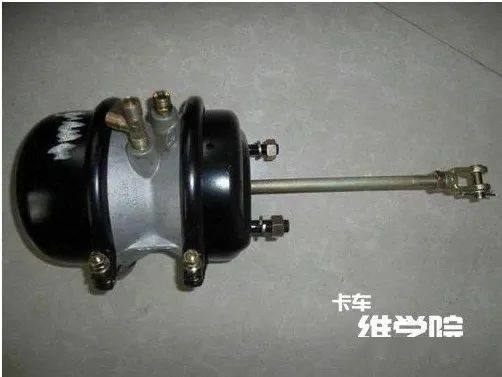
(4) Brake air chamber "air leakage illusion at the parking cavity tie rod" Special instructions: When the vehicle releases the handbrake, the compressed air enters the parking cavity through 12 ports, pushing the energy storage spring backward, and most of the excess gas in the parking cavity is discharged through the breathing hole, through the gap around the one-way valve and the small hole at the front end of the piston rod, and from the air intake port of the 11 cavity through the relay valve. However, due to the rapid retraction of the energy storage piston, the small hole in the piston shaft crosses the sealing ring, so that the gas in the parking cavity is compressed in the parking cavity without having time to discharge all the gas in the above way. These compressed gases (more than 200kPa) locked in the parking cavity can only be discharged from the riveting (near the release of the parking bolt), because the gaps of the riveting are different, so some exhaust times are longer (lasting more than 5 minutes), which will cause the illusion of air leakage.
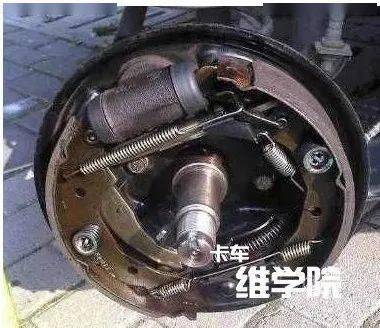
2. The front brake air chamber leaks
(1) Press the brake pedal to the bottom and hold it still, apply soapy water to the front brake chamber clamp and observe whether there are bubbles.
(2) Press the brake pedal to the bottom and hold it still, apply soapy water to the breathing hole of the front brake air chamber, observe whether there are bubbles, and replace the brake air chamber if there are bubbles.
Tips:
Do not have high-pressure springs in the brake compartment, please pay attention when opening.

Focus on the research and development of automotive brake systems and pneumatic brake valves to promote the development of the auto parts industry!
Contact Information
Telephone:86-575-87438928
Mobile:8613252110178
QQ:1185450863@qq.com
Address: No. 461, Advanced Village, Fengqiao Town, Zhuji, Zhejiang Province
Online message
Submit your information and we will contact you as soon as possible.