


09
2026
-
07
Observation: The survival challenges of parts companies should be noticed
Freight rates are low, the market is down, and the trucking industry is at a critical stage of transformation. With production and sales falling, manufacturers are in fierce competition, and intense internal competition has become the norm.
According to Truck Home’s observations, news about the tough survival situation for parts companies keeps coming out. The sluggish market has had a deep impact on the entire supply chain, and parts companies are among the most directly affected.
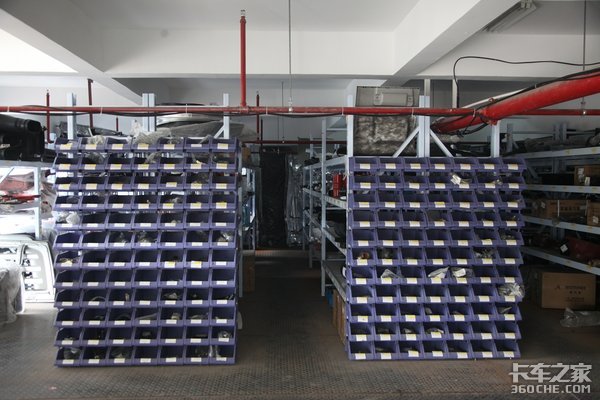
● Observation: Truck parts companies are struggling to survive
According to industry insiders, most key parts companies are seeing new production orders drop to at least 60% of their previous peak levels. The direct decline in capacity translates to real financial losses for these parts companies, leading to operational difficulties.
"Since about last year, walking through automotive parts industrial parks, you can see banners or big posters outside company gates saying things like 'Factory for Rent' or 'Factory for Sale,'" said a parts industry professional with nearly 20 years of experience. He told us that in his career, this is the first time he has seen the market look so bleak.
He explained that this situation isn’t limited to low-end truck parts companies. From an overall perspective, even some specialized and innovative companies with core technologies and numerous industry awards are also facing operational difficulties. Everyone is struggling with survival challenges, moving forward with great difficulty.

● Analysis: Why Auto Parts Companies Struggle So Much
When it comes to why auto parts companies have such a hard time, we think the main reasons are as follows.
First, starting in the second half of 2021, sales of commercial vehicles dropped sharply. A decline in full vehicle sales inevitably directly affects the demand for parts. As the saying goes, "we're all in the same boat," so it's naturally tough.
Second, as everyone knows, a few years ago, truck sales experienced a huge boom, with annual sales consecutively surpassing the one million mark, creating the peak period since the development of China's automotive industry.
At that time, when the market was doing well, in order to meet the demand, many parts companies expanded their factories and production capacities, which directly led to a significant increase in labor and facility costs.
Besides the direct costs of labor and facilities, to pursue high production efficiency, many parts companies upgraded their production lines to automation. Advanced equipment and technology at that time naturally improved processes and saved labor costs, but for automated production lines, the bigger the batch, the lower the cost per product.
When order volumes drop, production scales can't be maintained, and it can get awkward where the cost of automated production ends up being higher than manual labor.

Third, in the face of the current sluggish market, some provincial and municipal governments where companies are located have introduced various favorable policies to stimulate new car sales, which can help warm up the market to some extent.
However, because most provinces currently have a high inventory of new cars, manufacturers will prioritize dealing with inventory vehicles, making it difficult to directly impact new car production, and thus it won't really boost the recovery of auto parts companies.
For auto parts companies, although some regional governments do have policies related to loans and taxes, many small and micro businesses find it hard to meet the requirements when applying. Even if they can apply, given the current market situation, companies are hesitant to take out loans to avoid mortgage repayments becoming a new burden.
Fourth, for suppliers who provide long-term stable supplies, settlements between auto parts companies and OEMs usually involve payment terms, while suppliers of raw materials like steel get paid monthly. With fewer orders in the current market, cash flow problems for auto parts companies can easily arise.
Fifth, compared to OEMs, auto parts companies lack bargaining power and negotiating leverage. It's an open secret in the industry that prices are required to be lowered every year. Even if production costs rise or raw material prices go up, auto parts companies have to stick to the trend of lowering prices, which only worsens their survival situation.
Sixth, in the commercial vehicle market, new energy vehicles are the development trend. In terms of the quantity of parts required, new energy vehicles have significantly fewer types and amounts of parts compared to traditional vehicles. As the market share of new energy products increases, this dilemma for traditional fuel vehicle parts manufacturers will only intensify.

● Exploration: How Spare Parts Companies Can Save Themselves During Special Periods
Knowing the difficulty and understanding why it's difficult, the next thing to consider is how to save themselves. On this, Kong Lingqiang, director of the Truck Home Consulting Research Institute, gives the following advice.
First, increase brand strength and influence.
From market observations, in this round of crisis, small and medium-sized enterprises lacking core competitiveness face the most severe challenges, while some key spare parts companies with core technology and strong brand power still have relatively strong revenue capabilities.
Therefore, if spare parts companies want to survive better, besides taking the most direct measures to ease financial pressure, such as layoffs, shutting down some production lines, and downsizing factories, they should pay more attention to building their brand and developing high-end technology, deeply integrating with main vehicle manufacturers to increase their influence and bargaining power.
Second, strengthen competitiveness in niche spare parts areas
As the incremental market shifts to stock competition, relying on existing product lines cannot achieve further growth. Currently, some trailer and tank truck companies have started to explore new markets beyond their previous product layouts, focusing on specific and niche products. The current market situation is hard to change in the short term, so spare parts companies also need to enhance their competitiveness in niche areas.

Third, focus on the development of new energy products
From the industry trend perspective, new energy is unstoppable. At the same time, there are new standards and requirements for parts and components. Traditional parts companies also need to adapt to industry changes, strengthen their R&D and production capabilities for relevant supporting parts, and keep up with the times.
Fourth, look to overseas markets for growth
With the domestic market sluggish, major domestic OEMs are turning their attention abroad. According to observations from Truck Home, some capable parts and trailer companies are also starting to focus on overseas markets, following the OEMs to expand and prepare to carve out a space internationally.
Of course, entering overseas markets isn’t suitable for every company. For most OEMs, the overseas market is just starting, and it will take time to sell their products. The demand for the necessary parts will also grow noticeably only after the products have been on the market for a while. So, this approach might be workable for big companies—they have the strength to plan and wait—but for some small and medium-sized companies, it’s not an immediate solution.

● Editor's Note
The market is tough right now, and the survival of parts companies deserves attention from the whole industry. We believe that without well-developed parts companies, independent truck brands can’t thrive. This wouldn’t just hurt China’s independent truck industry, but also seriously impact the development of the national economy.
Previous Page
Previous Page

Focus on the research and development of automotive brake systems and pneumatic brake valves to promote the development of the auto parts industry!
Contact Information
Telephone:86-575-87438928
Mobile:8613252110178
QQ:1185450863@qq.com
Address: No. 461, Advanced Village, Fengqiao Town, Zhuji, Zhejiang Province
Online message
Submit your information and we will contact you as soon as possible.