


04
2026
-
07
Long-term parked car going back to work? Don’t forget to check these key parts

Old Wang is a seasoned driver with 30 years of experience. Like many other truckers, he parked his truck before the Spring Festival, planning to start work again after the holidays. But the sudden outbreak of the pandemic disrupted all plans, and his truck ended up sitting idle for two whole months.
As the situation started to ease, Old Wang decided to pack his bags and embark on the first 'trip' of the new year. This time, he planned to drive along with his cousin who had just started in the business, taking the opportunity to pass on some driving experience to him.
Coolant level is key; be careful if it drops.

Arriving at the car, Old Wang didn't rush to get in and start it; instead, he first opened the hood to check the coolant level. At this moment, his cousin asked him, 'Bro, what are you looking at?'

Old Wang replied: "It hasn't been running for such a long time, let me check if the coolant is low. When a vehicle is parked for a long time, it's easy for the coolant to decrease and other issues to happen.
If it has decreased, there are generally two situations. First, check if there's any coolant leaking under the car. If there is, quickly take measures to fix the leak and then add antifreeze."
Cousin: "So what if there's no coolant leaking under the car?"

Old Wang: 'If there's no coolant under the car, it's best to check the engine oil level. If the oil level is higher than normal, it means the engine cylinder sleeve water ring has aged or cracked, causing coolant to flow into the oil pan. At that point, you shouldn't start the engine and should contact the service station for repairs as soon as possible.'
Cousin: 'Got it. So there’s actually a lot to know about coolant levels. Learned something new! Luckily, our car is fine. I guess we can finally hit the road now, right?'
The low-pressure oil circuit is just as crucial, so you can't be sloppy when checking the intake.
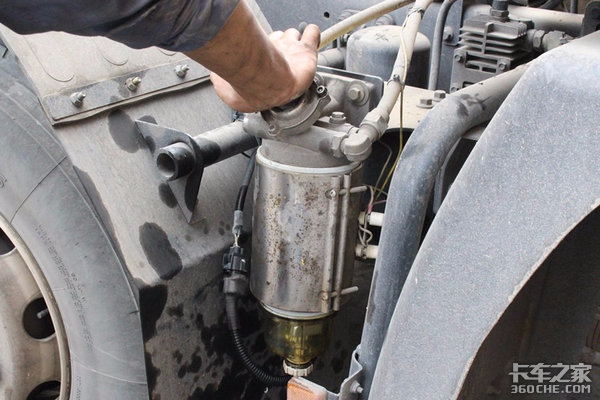
Old Wang: "Not yet. After checking the car's 'water,' you still need to check the oil. My car is old, the low-pressure fuel line easily lets in air, and on top of that, it hasn't been started for a long time. We have to pump the fuel a few times by hand first."
Cousin: "Pump the fuel by hand? That's too much trouble."
Old Wang: "You can't be afraid of trouble! After pumping, the lines will have pressure, and starting the car will be much easier. The car has been sitting so long, the battery can easily lose power, and if it doesn't start right away, trying again will be even harder."

Cousin: 'Mine is a brand new car, it has an electric fuel pump. If I use it before starting the car, will it work too?'
Old Wang: 'Yes, your electric fuel pump just replaces my manual pumping step with a motor. Compared to that, yours is definitely easier!'
Cousin: 'Got it, so mine is actually easier. Hurry and change your car, Old Wang, hahahaha! The fuel system is checked already, anything else that needs checking?'
Tire pressure is really important, don’t wait until you’re on the road to get stuck.

Old Wang: 'And the most important thing is the tires haven’t been checked. You know this car has been sitting for two months, so slow leaks are inevitable. If we don’t check them now, it could be a problem on the road.'
Cousin: 'Got it, I’ll look them over carefully. Old Wang, what do you usually set your tire pressure at?'
Old Wang: 'It used to be over 10, but I later realized high tire pressure isn’t good, so I adjusted it to around 9. It really feels different when driving now. You should remember, higher tire pressure isn’t always better!'
Cousin: 'Got it, I’ll study tire pressure more when I get back.'
The best time to waterproof the air storage tank: details ensure safety

Old Wang: "Oh right, I almost forgot. When we check the tires, don’t forget to drain the water from the air tank. Now is actually the best time to do it."
Cousin: "Got it! I’ll pay close attention to the water part. It’s closely related to brake safety, so I won’t be careless. If there’s too much water, we’ll need to hurry and replace the dryer."
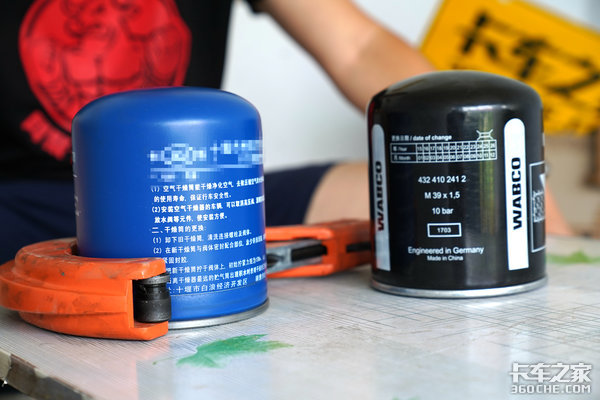
Old Wang: "Hey, that's a good point, but I still have to remind you, if you ever replace the dryer on your truck, make sure to use genuine parts. I read a report on Truck Home about low-quality dryers—substandard products can't filter water at all, it's like not having one installed!"
Cousin: "Got it. I really can't be careless when it comes to safety. Plus, the main thing is, you develop a bond with your truck. If I take good care of it, it'll definitely take care of me."
Don’t ignore trailer brakes; dragging tires cause big losses

Old Wang: 'Alright, now we can get in the car.'
With the roar of the engine, the car started moving, but after just four or five meters, Old Wang stopped the car.
Cousin: 'Huh, Old Wang, why did you stop?'
Old Wang: 'Ah, you're still too young and inexperienced. I stopped to check if all the brakes on the trailer were fully released.'
Cousin: 'How could they not be completely released?'
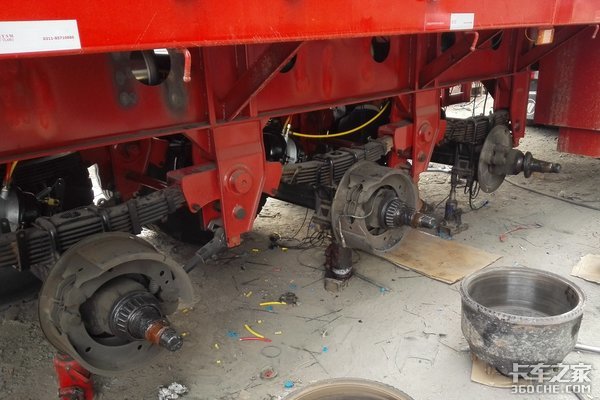
Old Wang: 'This actually has to do with long-term storage. Because it hasn't been used for a long time, the trailer brakes can get stuck and not return. Back in the day, I neglected to check, which caused the two tires on the left side of the trailer to be completely destroyed, and in the end, I had to spend money to learn my lesson.'

If the brakes aren't fully released, after driving 4 to 5 meters, you can see if the tire has drag marks. If so, you should quickly find a technician for repairs to avoid losing the bigger picture by minor issues. Remember this."
Cousin: "Old Wang, if you don't tell me, I really would have overlooked it. Looks like I still need to learn from you!" ”
With two doors closing, Lao Wang and his cousin started the truck again. As the speed gradually increased, the vehicle slowly disappeared at the end of the road.
Old Wang and my cousin are just made up, the key is to properly check the vehicle.
This time, we're using fictional characters to show everyone how to properly check the various parts of our vehicles after resuming work, and it can be summarized as
1. Check the coolant; if the level drops, figure out whether it's a leak or engine water intrusion to avoid bigger problems.
2. Inspect the low-pressure fuel line to see if air has gotten in. Before starting, you can pump fuel using the hand pump or electric pump, making it easier to start the vehicle.
3. Don’t ignore tire pressure. Keep a pressure gauge in the car and check/adjust anytime—don’t wait until you can’t move to deal with it.
4. Draining water from the vehicle’s air tanks is essential. If there’s a lot of water, replace the dryer promptly. Don’t take safety lightly.
5. Trailer brakes are equally important. After driving a few meters, get out and check for tire drag marks. If needed, inspect the trailer brake for sticking to avoid bigger issues from small ones.
I believe that after reading this article, fellow car enthusiasts will do a more thorough check of their vehicles before hitting the road, making our cars safer, more worry-free, and more cost-effective.
Previous Page
Previous Page

Focus on the research and development of automotive brake systems and pneumatic brake valves to promote the development of the auto parts industry!
Contact Information
Telephone:86-575-87438928
Mobile:8613252110178
QQ:1185450863@qq.com
Address: No. 461, Advanced Village, Fengqiao Town, Zhuji, Zhejiang Province
Online message
Submit your information and we will contact you as soon as possible.