


27
2025
-
10
Brake failure is terrifying. When will retarders become widely used?
With the rapid development of the logistics era, automotive technology is continuously innovating, making safety the primary concern for consumers and companies when purchasing vehicles. Braking is the basic guarantee of safety; when driving at high speeds, brake failure and improper handling can have unimaginable consequences. Uphill, downhill, sharp turns, skidding...

What are the causes of brake failure? When brake failure occurs, how can one make the correct judgment in a short time and minimize the damage to the greatest extent?● Causes: The three most common situations of brake failure

Today, we will mainly talk about air brakes. Simply put, the medium for air brake operation is compressed air. When the user presses the brake pedal, the compressed air in the air tank enters the wheel brake chamber through the brake valve to apply the brakes. Conversely, releasing the brake pedal closes the compressed air passage and simultaneously opens the brake valve to release the brakes.

1. Insufficient brake air pressure and a lack of routine maintenance of the braking system, along with aging air lines and valves, poor sealing, and similar issues, can lead to insufficient brake air pressure, thereby affecting braking performance.

2. Frequent continuous braking on highways or long downhill mountain roads can cause massive heat generation due to friction from prolonged and repeated braking, leading to brake fade and eventually brake failure.

3. High-speed overload: When driving at high speed, the heavier the vehicle, the greater the inertia, and the longer the coasting distance. This is why we often hear drivers say that under severe overloading, the brakes simply cannot stop the vehicle.● Insufficient air pressure: Shifting gears recklessly increases danger.

Downhill sections can easily trigger brake failure, which is an emergency situation and usually has no warning signs. Moreover, most people might think that in case of brake failure, one can simply downshift to decelerate. However, many modern heavy trucks use air-assisted clutches, and when air pressure is insufficient, the clutch is almost impossible to press, let alone downshift.Generally, downshifting from a high-speed gear to a low-speed gear requires raising the engine speed. If brake failure occurs due to insufficient air pressure, the clutch is likely to fail as well. Trying to downshift by revving the engine in such a scenario is extremely risky and not recommended. Even when brakes are functioning properly, driving in a low gear on long downhill roads minimizes the risk of brake failure. The benefits of using a low gear downhill are probably well understood, so they will not be elaborated here. ● Auxiliary braking for safe driving

Engine-assisted braking: Simply put, this means that there is a power chain in the vehicle. When going uphill, the engine generates power, which drives the vehicle after passing through the transmission system. Similarly, when going downhill, we can generate resistance through the engine to create a braking force on the vehicle. For a detailed introduction, please click: Safe Driving Saves Money and Worry-Free - Introduction to Engine Braking Function.
Hydraulic retarder: Simply put, it is a device that reduces the vehicle's driving speed through a hydraulic mechanism. It consists of components such as the retarder body, control device, and electronic control unit. In the structure of the retarder body, the rotor and stator together form the working chamber. When the hydraulic retarder is operating, the electronic control system controls the proportional valve to apply air pressure to the working fluid, allowing the fluid to fill the working chamber.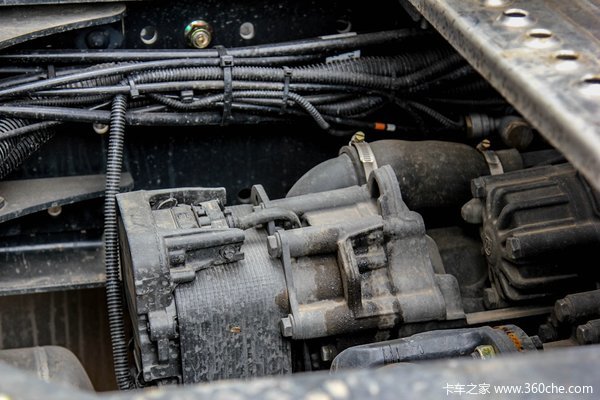
The rotor rotates along with the output shaft, driving the fluid to spin, while the stator remains fixed, generating a reaction force on the fluid. This reaction force is also transmitted back to the rotor, resisting its rotation, thereby achieving the effect of slowing down the vehicle. Due to the high initial purchase cost of the hydraulic retarder, its widespread use in China still requires some time. ● Editor's Note: The tragedies caused by brake failure in the past are still vividly remembered. Preventive measures are the best solution, and one should never neglect routine vehicle maintenance with the mindset of 'no problem, no abnormalities.' Before driving, it is essential to check the braking system and develop the habit of pressing the brake whether or not there is an issue when descending long or steep slopes. This not only tests the braking performance but also provides time to control the vehicle’s speed and anticipate potential brake failures.

Focus on the research and development of automotive brake systems and pneumatic brake valves to promote the development of the auto parts industry!
Contact Information
Telephone:86-575-87438928
Mobile:8613252110178
QQ:1185450863@qq.com
Address: No. 461, Advanced Village, Fengqiao Town, Zhuji, Zhejiang Province
Online message
Submit your information and we will contact you as soon as possible.