


17
2026
-
10
Being lazy with your hands and using fake goods will get you into trouble Key points for checking the air brake system
With winter approaching and temperatures dropping sharply, truck air brake systems start showing typical seasonal problems: air supply issues, brakes not returning, and brake failures causing quite a headache, and some even leading to serious accidents. So it’s important to give the vehicle’s air brake system a thorough check before winter. Although the basic structure of mainstream domestic truck air brake systems hasn’t changed much over the years despite improvements and upgrades, new components like ABS sensors and air dryers have higher requirements for the braking system, so special attention is needed here too.
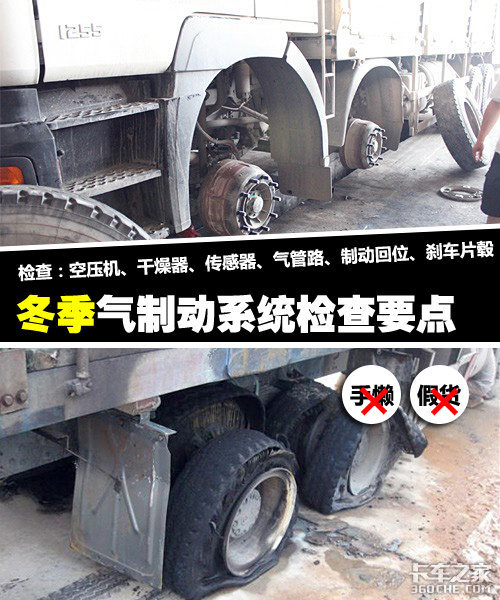
Through case studies of truck drivers and some accidents, it is found that some serious accidents, such as trailer fires and brake failures, are related to the braking system, and minor faults and parts often lead to major disasters. Some faults arise from systems not being checked regularly or the use of fake parts, which can appear fine at the time and create a false sense of security. The following outlines several key points for inspection and regular replacement of parts.
● Air compressor check Severe oil leakage can cause downstream faults

When checking the relief valve outlet, pay attention to whether there is serious oil contamination. If it is heavily soiled, the air compressor needs maintenance, and replacement may be necessary.

Pay special attention to whether the air compressor's oil lubrication pipe is intact, and note that the oil pipe cannot be repaired by welding when installed. Check for any stiffness or vibration during installation. A broken lubrication pipe can easily cause serious damage to the air pump and engine. The vehicle should keep a spare oil pipe for replacement. Check if the air intake pipe of the air compressor is intact to ensure clean and sealed air intake. (Different engines have different types of air compressors)

During winter cold starts, do not rev the engine heavily before the water temperature reaches 60-80 degrees, to avoid the compressor suffering poor lubrication, which can cause cylinder scoring, excessive wear, oil leakage, and carbon build-up on the cylinder head (compressor). ● Check the dryer, as high intake temperatures affect regeneration performance


It's hard to judge the performance of a dryer just by its appearance. Since a dryer completes a work cycle by doing both 'absorbing water and draining water', besides choosing a high-quality dryer, you also need to check if the system is working properly. For example, if there is heavy oil residue at the exhaust port, it indicates that the dryer's molecular sieve is heavily contaminated with oil and has completely failed, losing its water-absorbing function.


Checking the backblow performance of the dryer: a properly working dryer will, when depressurising, use compressed air from the backblow tank or air receiver to backblast the dryer's molecular sieve and expel moisture. At this time, the exhaust port will make a 'puff' sound and release water vapour. If there's no exhaust action, check the dryer base, pressure relief valve, and the four-way protection valve, and replace them if necessary.

The intake air temperature can be checked using temperature test paper, and when it exceeds 65 degrees, the dryer filter performance decreases or even fails. Especially for some batches of Dongfeng Tianlong tractors, additional measures like installing spiral pipes are needed to reduce the temperature.

Focus on the research and development of automotive brake systems and pneumatic brake valves to promote the development of the auto parts industry!
Contact Information
Telephone:86-575-87438928
Mobile:8613252110178
QQ:1185450863@qq.com
Address: No. 461, Advanced Village, Fengqiao Town, Zhuji, Zhejiang Province
Online message
Submit your information and we will contact you as soon as possible.