


17
2026
-
04
Should the front brake be removed or not? These risks must be considered.

The topic of removing the front brakes has been discussed several times. Any truck driver who has driven a tractor for a few years should know that in the past, due to technical issues causing uneven brake force distribution in tractors, drivers had no choice but to remove the front brakes. Regarding this topic, most drivers responded that in today's era of widespread ABS, no one would completely remove the front brakes; slightly loosening them is understandable.
However, even now, a small number of vehicle owners still choose to remove the front brakes.
● Fact: Removing the front brakes still exists
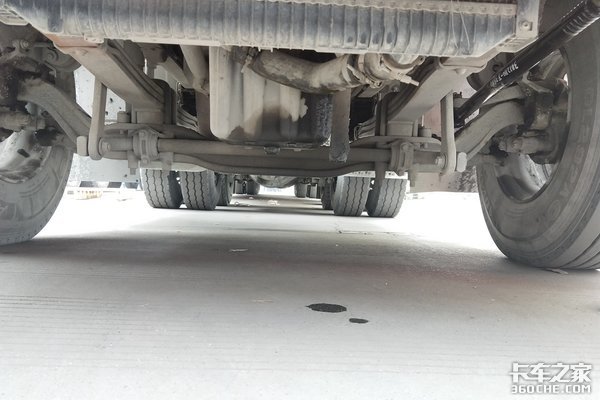
On April 6th, when we were visiting a truck driver at the Chuanhua Logistics Park in Chengdu, just a casual glance in the parking area of the logistics park revealed the situation shown in the picture above. The vehicle has now completely removed the front brakes and the brake drums. Is it really necessary to dismantle it so thoroughly?
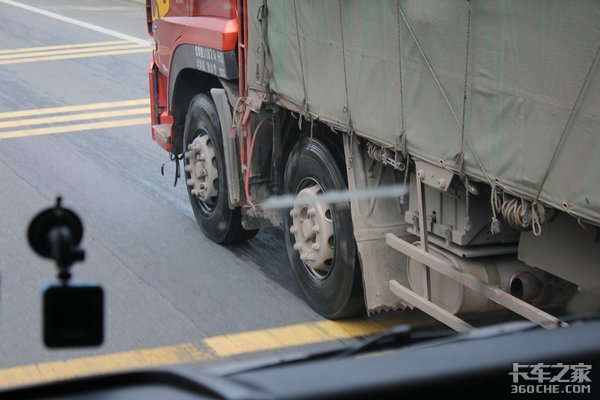
In the past, before ABS became widely adopted, after a driver applied the brakes, due to issues with brake force distribution, there would be situations where the brakes on the tractor and the trailer were not synchronized, which could easily cause jackknifing and posed a great danger to drivers. This was especially risky in rainy or snowy weather, when the lack of synchronization between the tractor and trailer brakes further increased the danger. Therefore, in the past, many models, starting with the 6X2, would completely remove the front brakes, which was also a helpless measure taken by many drivers.

However, looking back at today's vehicle braking technology, ABS basically became standard in 2014, and now EBS (Electronic Braking System) and its derivative safety assistance technologies like ESC and ASR have also become mainstream configurations. However, some truck drivers have reported that, especially for tractor-trailers, there are still matching issues between the main and secondary vehicles. In the absence of a solution, the only option is helplessly to loosen the front brakes.

When we previously discussed this topic, many riders' responses were that just loosening the front brake would suffice, and nowadays, hardly anyone would remove the front brake entirely. However, what we saw at the logistics park is exactly that—the bare axle was particularly eye-catching. So, besides leaving a braking hazard, what other risks would there be in removing the front brake?

Legal risks and responsibility allocation: In the event of the situation we least want to see, during a traffic accident, when the traffic police conduct a technical inspection of the vehicle's brakes. Without a doubt, the party at fault who removed the front brakes causing insufficient braking force will face greater legal responsibility.

Secondly, when an insurance company investigates an accident scene, if they find conclusive evidence such as the removal of the front brakes, the insurance company can basically walk away. If the car owner deliberately removes the front brakes, the insurance company has ample reason to refuse compensation or reduce the payout.
Failing the annual inspection: During the vehicle's annual inspection, the braking performance of the entire vehicle and the braking system are tested. A vehicle with its front brake system removed will have difficulty passing the inspection. Even if temporarily reinstalled, it is hard to pass in one go.
In today's world where ABS and various assisted braking systems are common, why do some people still choose to remove or loosen the front brakes? Theoretically, no one would intentionally sacrifice safety; the main reason is that there are still occasional compatibility issues between the master and the follower. Therefore, a few car owners loosen or even remove the brakes to reduce the risk of damage, thinking it makes braking 'safer,' but could it leave other hidden dangers? This is something we need to seriously consider. To reduce risks, it is recommended not to excessively alter the original design of the car.
Previous Page
Previous Page

Focus on the research and development of automotive brake systems and pneumatic brake valves to promote the development of the auto parts industry!
Contact Information
Telephone:86-575-87438928
Mobile:8613252110178
QQ:1185450863@qq.com
Address: No. 461, Advanced Village, Fengqiao Town, Zhuji, Zhejiang Province
Online message
Submit your information and we will contact you as soon as possible.