


04
2026
-
03
Are you sure you really know how to use the exhaust brake valve?
The exhaust brake valve is an auxiliary brake and is a necessary supplement to the vehicle's service brakes. The exhaust brake valve uses the engine as an air compressor to generate braking torque, thereby slowing down the vehicle. It is generally installed in the exhaust pipe, and when deceleration is needed, the valve is closed to block the exhaust passage, achieving a braking effect. Its function is to reduce or maintain the speed of the vehicle without or with minimal use of the service brakes, but it cannot bring the vehicle to an emergency stop.
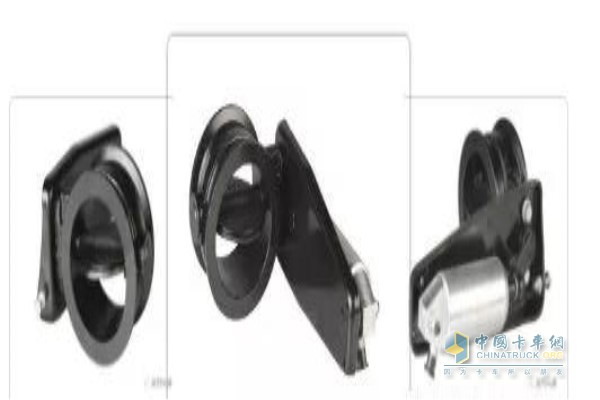
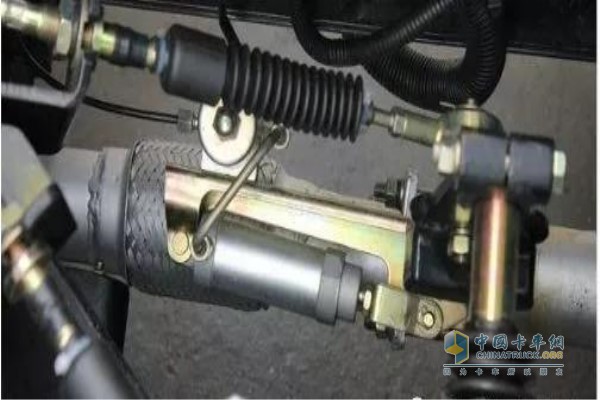
Exhaust Brake Valve
Exhaust brakes are widely used on large diesel vehicles. A control valve is installed on the engine's exhaust pipe; by closing this valve, the pressure in the exhaust stroke is increased, and braking force is obtained using the generated vacuum. The control valve is generally driven by a control mechanism that uses compressed air or vacuum, and in most cases, it uses the same power source as the main brakes. Exhaust brakes are usually activated by a manual switch. To prevent the engine from stalling when parked or the exhaust brake from operating during fuel injection, pressing the accelerator pedal or clutch pedal automatically disengages the exhaust brake. Since fuel supply must be cut off during operation, exhaust brakes cannot be used on gasoline vehicles. Proper use of exhaust brakes can greatly reduce the use of service brakes, thereby reducing wear on brake shoes (or discs) and significantly lowering the safety risks caused by continuous brake overheating.

Large Diesel Vehicles
Common Misunderstandings
1. It damages the engine. Because the principle of exhaust braking is to block the exhaust manifold, causing the pressure in the exhaust pipe to increase, a rather special sound is produced. Therefore, some people believe that exhaust braking will harm the engine. In fact, the butterfly valve in the exhaust system does not completely block the exhaust manifold; it still adjusts its opening according to the pressure in the exhaust manifold, so it is harmless to the engine.
2. It will cause high-temperature conditions in the exhaust system. Since no fuel is being injected, there is no combustion, and the exhaust temperature will not be very high. At the very least, it will not reach the temperature of post-combustion exhaust gases. Therefore, there is no high-temperature problem associated with using exhaust braking. The high temperature and high pressure generated by diesel combustion cannot damage the pistons, so exhaust braking is even less likely to cause damage.
3. Impact on the entire system. When using the exhaust brake, the engine continues to rotate, so components such as the water pump, oil pump, power steering pump, air compressor, and generator all continue to operate normally. Therefore, functions like cooling, lubrication, steering, air pressure, and charging are not affected. So, it not only does no mechanical damage but also does not affect safe operation.

Large heavy-duty trucks using exhaust brake valves
With the development of society, safety and efficiency have become the goals of the logistics industry. High-performance engine auxiliary braking systems naturally become key to improving safety. No matter how advanced the auxiliary braking is, the key is knowing how to use it.
Previous Page

Focus on the research and development of automotive brake systems and pneumatic brake valves to promote the development of the auto parts industry!
Contact Information
Telephone:86-575-87438928
Mobile:8613252110178
QQ:1185450863@qq.com
Address: No. 461, Advanced Village, Fengqiao Town, Zhuji, Zhejiang Province
Online message
Submit your information and we will contact you as soon as possible.