


16
2026
-
01
The rise in raw material prices has a major impact, leaving component manufacturers struggling.
The rise in raw material prices this time has not only brought significant cost pressure to vehicle manufacturers but has caused even greater pressure on parts suppliers.
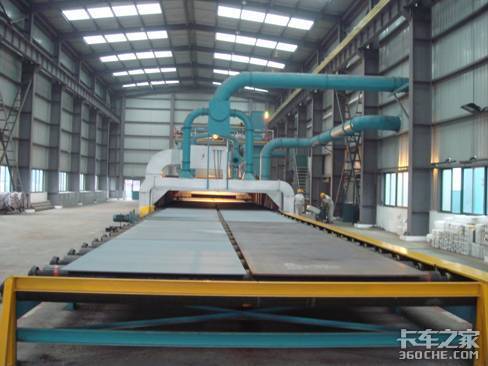
Rising Raw Material Prices Leave Component Manufacturers Struggling
● Gearbox Companies Swallow Their Bitterness
'Our company is heavily affected. On one hand, raw material prices are rising too quickly; on the other hand, customers are still asking us to lower prices,' a sales department representative from Qijiang Gear Transmission Co., Ltd. told the Commercial Vehicle News reporter. 'Companies usually try to absorb the cost pressures brought by rising raw material prices through cost control and avoid passing the pressure on to customers. However, the recent dramatic fluctuation in steel procurement prices meant that the company initially intended to negotiate price adjustments with customers, but it coincided with the New Year holiday. Customers mostly wanted to hold promotional events during this time, so instead they demanded that manufacturers lower prices, putting considerable pressure on the company.'
During the interview, the representative was full of grievances but had no practical solution. 'Faced with rising raw material costs, we are in a weak position. A certain bus company demanded an 8% price reduction, while raw material suppliers also demanded higher prices. Therefore, we could only negotiate with both sides to try to preserve our slim profits. For products that cannot be maintained, we can only introduce new versions through technological innovation.'
● Axle companies are struggling to hang on
“Last year, the commercial vehicle industry was doing relatively well, and raw material suppliers were more insistent on price increases. If their demands were not met, it could lead to delays in deliveries and other issues. Therefore, under cost pressures, we had no choice but to absorb the increases through various means, such as cost control, which is a common practice. We also made slight adjustments to market prices, of course, without affecting our market share. At present, it seems that this kind of rapid growth cannot continue for long,” Ma Liefang, Deputy General Manager of Hande Axle Co., Ltd., told reporters. “From what I understand, steel prices have risen by about 20%.”
A representative from Guangxi Fangsheng Axle Co., Ltd. told reporters, “The rise in raw material prices has put a lot of pressure on us. Steel prices have increased by 5%, and currently, steel costs range from 3,700 to 3,850 yuan per ton. It is expected that by the first quarter of this year, prices could rise to 4,500 yuan per ton. However, vehicle manufacturers do not agree to us adjusting our prices, so we have to absorb the costs ourselves. If raw material prices continue to climb, it will become even more difficult for companies to manage these increases internally.”
● Internal Efficiency Improvement in Engine Companies
"The rise in raw material prices directly affects the profit margins of every company," said a relevant person in charge of procurement at Foton Environmental Power Co., Ltd. "At the end of each year, the procurement department sends letters to suppliers according to the company's requirements, requesting price adjustments, with the extent depending on the type of component. After negotiating the prices, they are written into the procurement contract and signed with the suppliers. This constitutes the price adjustment at the beginning of the following year. Afterwards, if there are significant changes in international or domestic raw material prices that suppliers find hard to bear, the prices will be adjusted again. Under normal circumstances, the products priced after the early-year adjustment are not generally further increased by the OEMs."
The person stated: "Companies generally do not raise prices unless absolutely necessary. While negotiating prices with suppliers, it is crucial to focus on internal management and reduce costs from within the company. Common measures include manufacturing cost control (process routes, parameter optimization), optimizing product structure design, lean production, zero-inventory management, and improving individual capabilities (including execution, management, and technical skills)."
● Tire Companies Raise Prices
Recently, tire companies have been adjusting the prices of their products upward. The main reason for the across-the-board price increase is the rise in rubber prices. Generally speaking, tire raw materials consist of natural rubber and synthetic rubber, and these two types of raw materials account for 55% of the total cost. The usage rate of natural rubber is slightly lower than that of synthetic rubber.
"The price of natural rubber has been continuously rising since June 2009, going from $1,500 per ton to a current peak of $3,200 per ton, an increase of over 50%," said Ma Liang, Purchasing Manager at Linglong Tire in Shandong. The price increase of synthetic rubber is equally staggering.
"The pressure is very high. When raw material prices go up, product prices have to rise accordingly. While it's easy to negotiate a price reduction with distributors, they are not happy when it comes to price increases. But to ensure profits, product prices have no choice but to rise; if we don't increase prices, it will be difficult for us to survive," said Yang Yunshan, Overseas Marketing Manager at Linglong Tire in Shandong. "We expect the price of natural rubber to continue rising after March."
Yang Yunshan added that the company is discussing a 3% to 5% price increase with distributors. "We don't have an advantage in procurement because our volume is not large; basically, we can only cover one day's material usage."
Previous Page
Previous Page

Focus on the research and development of automotive brake systems and pneumatic brake valves to promote the development of the auto parts industry!
Contact Information
Telephone:86-575-87438928
Mobile:8613252110178
QQ:1185450863@qq.com
Address: No. 461, Advanced Village, Fengqiao Town, Zhuji, Zhejiang Province
Online message
Submit your information and we will contact you as soon as possible.