


11
2025
-
09
Unreliable gas connection? The issue with the handshake valve needs to be resolved first.

The connection of the air line between the tractor and the trailer has a key component - the quick coupling. Generally, the quick coupling that comes with the tractor is a handshake type, which we usually refer to as the handshake valve; there is also an inserted type coupling, which many people call a quick coupling. Many of our users, after purchasing a new vehicle, replace the original handshake valve of the tractor with an inserted type coupling. In fact, some trailers that just came off the production line are already equipped with inserted type couplings to reduce the hassle of modifications for users later on. Why is the handshake valve so unpopular among some users?● Users: The inserted type is not perfect, but the handshake valve is even more concerning.
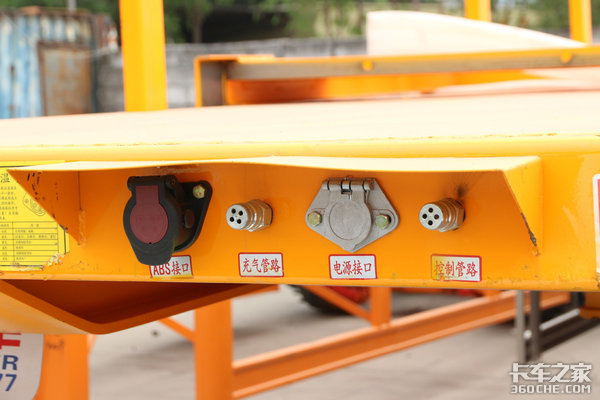 插接式快速接头
In fact, compared to this, the connection operation of plug-in joints is not so 'fast', and it is more suitable for users who do not frequently disconnect and connect. In contrast, handshake joints are more suitable for frequent connections and are more commonly used in logistics that involve quick disconnections.Furthermore, plug-in joints are not specialized vehicle components, and the airflow capacity of these self-locking quick connectors is often relatively small. Additionally, if plug-in joints are kept connected for a long time, they are prone to water accumulation and corrosion.
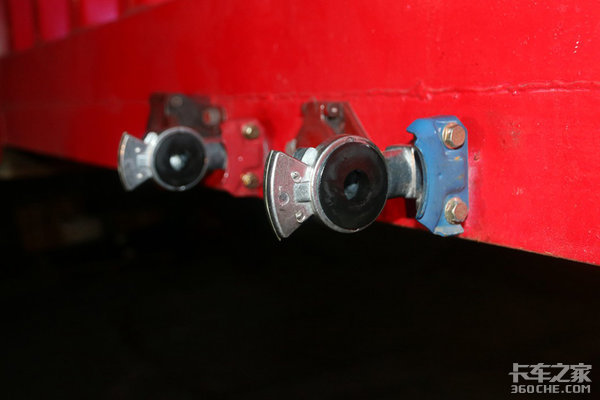 握手式接头
Since plug-in joints have these drawbacks, why are they still used? Some users have stated that it is simply because they are more reliable and do not leak air, although there are still some frustrations with the handshake valve in this regard.According to users, some handshake joints do not fit tightly and have issues with air leakage, and there are even concerns that they may come loose on bumpy roads. Everyone is well aware of the consequences of poor air supply, which can either affect braking performance or lead to brake dragging, both of which are very serious situations.● Handshake valves do not distinguish between male and female ends, so the connection and installation should not be too casual.There are usually two reasons that lead to this situation: one is that the quality of the rubber gasket is poor or it is aging and damaged, and the other is a design and specification issue with the handshake joint.
 Handshake joint connection statusUnlike plug-type connectors, the handshake joint is a component specifically designed for the connection of the air system between the tractor and the trailer, and there is one notable point - the joints are the same, without differentiation between male and female. It is worth noting that common quick connectors are usually differentiated into male and female ends, including plug-type connectors, seven-pin power connectors, ABS connectors, etc.When connecting, male and female connectors are easier to identify whether they are properly installed, while the handshake joint requires careful alignment during installation; otherwise, it may not connect properly or even damage the rubber gasket.● Inconsistent production specification accuracy leads to poor connection.
 By the way: In some areas abroad, the handshake valve of trailers is habitually locked, and there are also other anti-theft devices in Guangdong.Due to this special design, the requirements for production specifications and standards are relatively high. Currently, different manufacturers produce handshake joints with different molds and tolerance sizes. Often, the tractor and trailer use handshake joints from different manufacturers, which can lead to discrepancies during connection.If you find that the handshake joint does not connect properly, it is recommended to replace the paired joints with high-quality products from the same brand.

It is necessary to establish unified and strict standards for these vehicle components. On one hand, it affects vehicle safety; on the other hand, it impacts the development of the logistics industry. Currently, the development of domestic rental and shared trailers is constrained, one reason being the issue of vehicle standardization.

Focus on the research and development of automotive brake systems and pneumatic brake valves to promote the development of the auto parts industry!
Contact Information
Telephone:86-575-87438928
Mobile:8613252110178
QQ:1185450863@qq.com
Address: No. 461, Advanced Village, Fengqiao Town, Zhuji, Zhejiang Province
Online message
Submit your information and we will contact you as soon as possible.